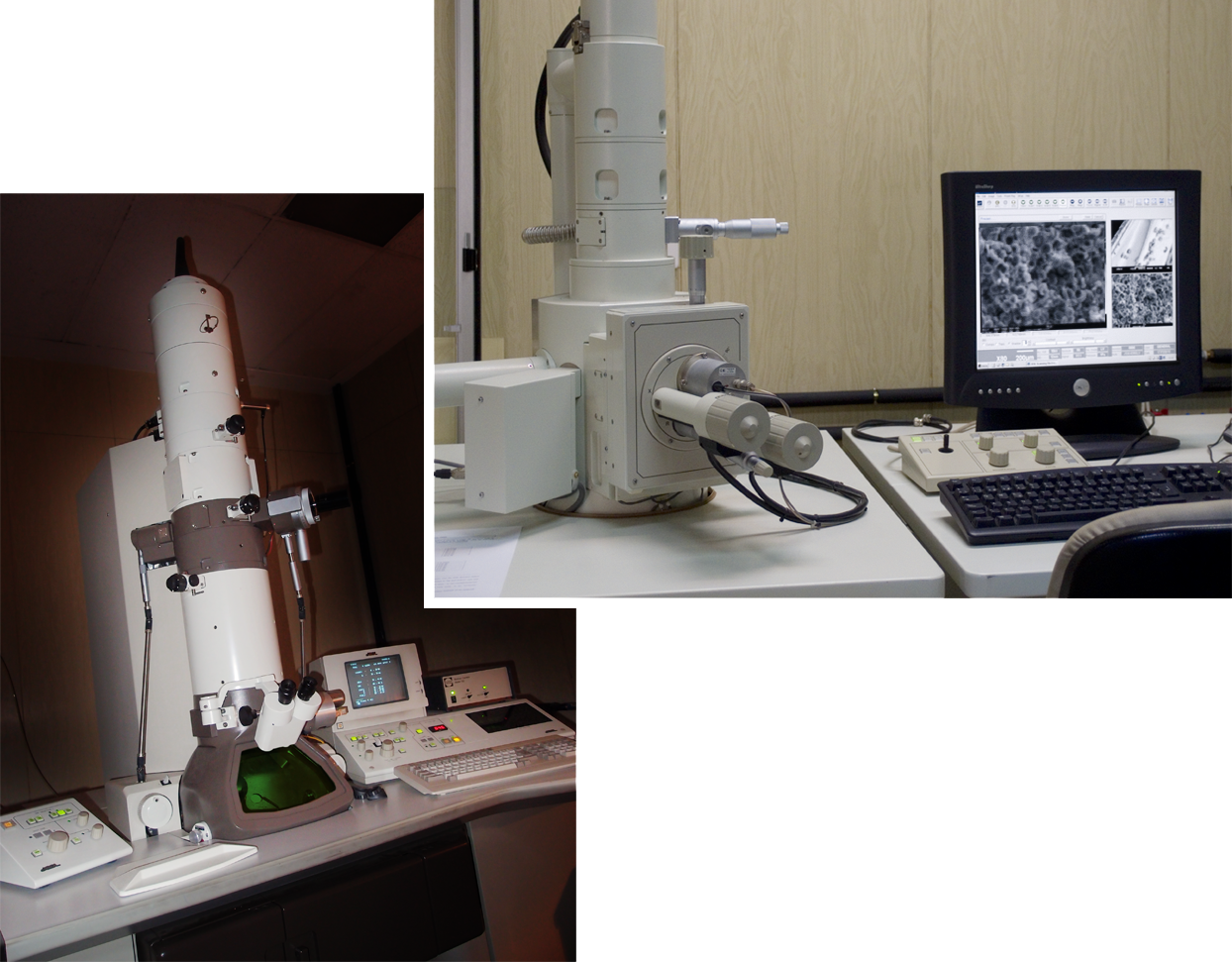
The Biological Systems Electron Microscopy Service of the University of Zaragoza provides advanced sample preparation, imaging and ultrastructural analysis for biological and biomedical research. The facility supports researchers from academia, hospitals, research institutes and industry through access to state-of-the-art electron microscopy instrumentation and specialized technical expertise.
The service is focused on the ultrastructural characterization of biological samples using transmission electron microscopy (TEM), cryo-fixation and advanced sample preparation techniques. The infrastructure enables high-quality preservation and visualization of cells, tissues, microorganisms, biomaterials and biological interfaces.
The laboratory offers complete workflows including:
• Conventional preparation for transmission electron microscopy.
• High-pressure freezing and cryo-immobilization.
• Freeze substitution and low-temperature embedding.
• Ultramicrotomy and section preparation.
• Advanced electron microscopy sample preparation.
• Image acquisition.
The service is integrated within the Scientific and Technical Research Support Services (SAI) of the University of Zaragoza and participates in collaborative research and technological transfer activities.
• Leica EM ICE (High-pressure freezing system)
• Leica EM AFS2 (Automated freeze substitution and low-temperature embedding system)
Ultramicrotomy
• Leica Enuity
• Leica UC6/FC6
Electron microscopy
• JEOL JEM-1010 Transmission Electron Microscope
• JEOL JSM-6360LV Scanning Electron Microscope (Low-vacuum scanning electron microscope)
SEM sample preparation
• Leica EM CPD300 (Critical Point Dryer)
• BAL-TEC SCD 005 sputter coater
• Biological sample preparation for EM.
• High-pressure freezing.
• Freeze substitution and resin embedding.
• Ultramicrotomy.
• Electron microscopy imaging.
Typical research applications:
• Cell biology.
• Neuroscience.
• Cancer research.
• Microbiology and virology.
• Biomaterials.
• Plant biology.
• Regenerative medicine.
• Histopathology.
• Nanobiotechnology.